 History
Guide
Who invented the mobile phone?
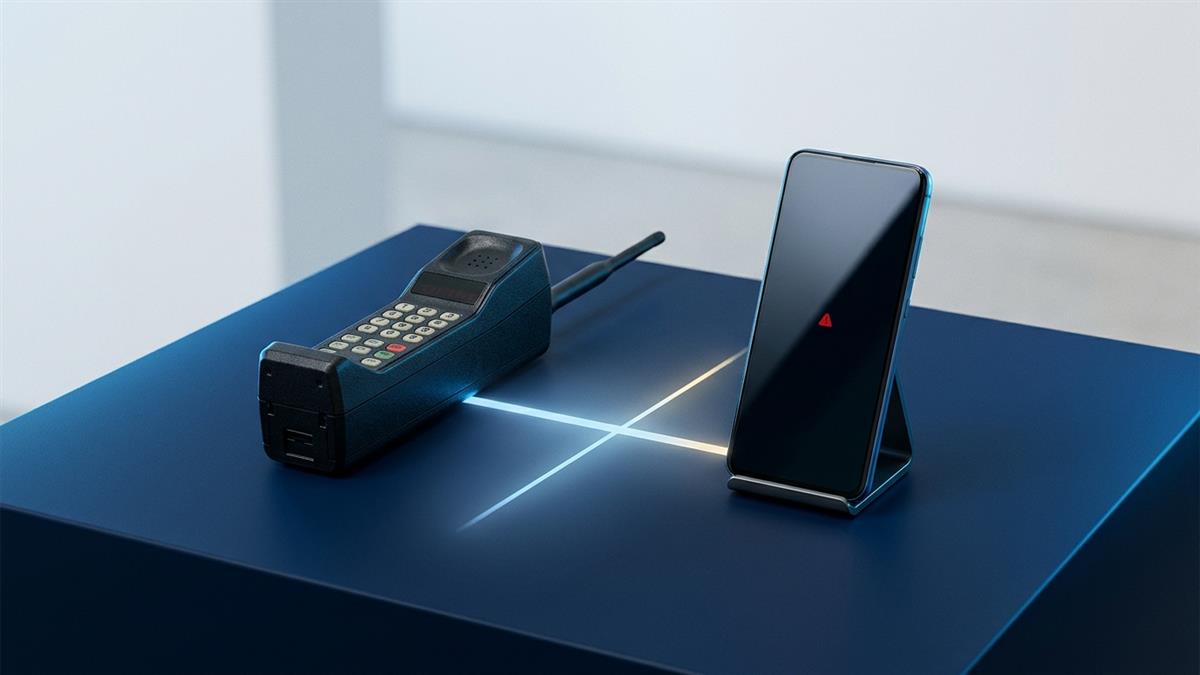
Every smartphone in the UK traces its family tree back to a brick-sized handset demonstrated on a New York pavement in 1973. The story is not a single invention by one person. It is a chain of radio engineering, regulation, commercial risk and a few very public phone calls. Understanding that chain explains why the UK numbering system looks the way it does today, why a mobile prefix is not the same thing as a network, and why a number can outlive the person who first owned it.
This article walks through the milestones that matter, from the earliest car phones to the first UK cellular call, the GSM switch, the first text message and the arrival of the smartphone. It is written for UK readers who want the history without the mythology.
The first handheld mobile call
On 3 April 1973, Martin Cooper, an engineer at Motorola, stood on a street in New York and made a call on a handheld radio telephone. He rang a rival at Bell Labs to tell them Motorola had got there first. The device was a prototype, not a consumer product, and it was heavy enough to need a carry case. Even so, the call demonstrated the central idea of the modern mobile phone: a personal handset, a radio link to a network, and no wire to the wall.
Motorola spent another decade turning that prototype into something that could be sold. The DynaTAC 8000X finally reached the market in 1983. It was expensive, offered roughly half an hour of talk time and needed hours to charge. It was also unmistakably mobile, and it set the template for every handset that followed.
Before the handheld: car phones and radio telephones
Mobile communication did not begin in 1973. Police, emergency services and utility companies had used radio telephones for decades. Car phones appeared in the 1940s and 1950s, usually with a transmitter in the boot and a handset near the dashboard. They were mobile only in the sense that the vehicle moved; the equipment was heavy, the coverage limited and the service expensive.
The crucial change was cellular architecture. Instead of one powerful transmitter covering a whole city, a cellular network divides an area into small cells, each with its own low-power base station. As a caller moves, the network hands the call from cell to cell. That design made it possible to reuse radio frequencies and serve many more people at once. Without it, a handheld phone would have been a novelty rather than a mass-market product.
The UK's first mobile call
The UK's first call on a cellular network is usually dated to 1 January 1985. The entertainer Ernie Wise made the call from St Katharine Docks in London to Vodafone's headquarters, launching the country's first mobile network. The handset was a transportable unit rather than a pocket phone, and coverage was limited to parts of London and the motorway network. Even so, the call marked the start of commercial mobile telephony in Britain.
Cellnet, a joint venture involving BT, launched shortly afterwards. The two networks used analogue technology, which meant poor security, limited capacity and distinctive call quality. Early handsets were status symbols in the City, not everyday devices. The numbers issued to those first customers sat in ranges that are still recognisable today, which is why a prefix lookup on an old UK mobile number can still point to an original allocation from the 1980s or 1990s.
GSM and the digital switch
Analogue networks were quickly overwhelmed. The answer was a common European digital standard: GSM. The UK's first GSM network went live in 1992, and the digital switch changed almost everything. Calls became clearer, capacity increased, and handsets became smaller. More importantly, the network could now carry data as well as voice, which opened the door to text messaging, early mobile internet and the services that followed.
GSM also introduced the SIM card as a separate, removable identity module. That small piece of plastic tied a subscriber to a number and made it possible to move a number between handsets. It is the ancestor of the eSIM in a modern phone, and it is the reason a phone number can survive a change of device, a change of network and, with portability, a change of provider.
The shift to digital also created the numbering patterns we still use. UK mobile numbers settled into the 07 range, with sub-ranges allocated to different operators. When you look up a number today and see an "original network" label, you are looking at that allocation history rather than a live check of the SIM.
The first text message
SMS was not part of the original GSM plan; it began as a way for engineers to send short maintenance messages. The first text message was sent in December 1992 by Neil Papworth, an engineer working on the Vodafone network, to a company director's phone. It read: "Merry Christmas". The recipient could not reply at first because handsets did not yet have a keyboard for composing messages.
Texting took off slowly, then astonishingly quickly. By the 2000s it had become the default way for UK teenagers to communicate, and short codes, delivery updates and appointment reminders followed. Many of those messages still arrive from the same kind of number ranges today, which is why a text from an unfamiliar 07 or 03 number is not automatically suspicious, but is worth checking.
When did mobile phones become smartphones?
The idea of a phone that could run applications and browse the web existed long before the iPhone. Early attempts in the late 1990s and early 2000s combined a mobile handset with a personal organiser, email and a basic browser. They were useful but clunky, and the mobile web was slow and expensive.
The modern smartphone pattern arrived with touchscreens, app stores and affordable mobile data. Once a phone could install software, take photographs, run maps and hold a messaging conversation, the mobile number became the key to an entire digital identity. That is also when the risks changed. A number is now tied to bank verification codes, password resets and delivery accounts, so losing control of it matters far more than losing a handset did in 1995.
What a number can reveal
A UK number lookup can show the number type, the area it was issued in and the network the range was originally allocated to. It cannot show the name or address of the person using it, because no public subscriber directory exists. See what a phone number lookup can really tell you.
Why the history still matters in the UK
The past of mobile telephony is not just trivia. It explains several things UK users run into every week:
- Why prefixes mislead. Numbers were allocated to networks in blocks, but portability lets a SIM move. A 07 prefix shows the original owner of the range, not necessarily the current provider. Our guide to identifying a mobile operator from a number explains the limits.
- Why numbers are recycled. Number ranges are finite and valuable. When a line closes, the number returns to the pool after a quarantine period. That means an old report about a number may describe a different owner. Read more about what happens to old mobile and landline numbers.
- Why old networks matter. The UK moved from analogue to GSM, then to 3G, 4G and 5G. The names on the mast have changed through mergers and rebrands, but the number ranges remain a historical record.
- Why calls still arrive from "unknown" numbers. Caller ID has always been a presentation layer, not a guarantee. Spoofing and withheld numbers are old problems with new tools.
Key dates at a glance
| Date | Milestone |
|---|---|
| 1940s-1950s | Car phones and radio telephones used by businesses and emergency services |
| 3 April 1973 | Martin Cooper makes the first public handheld mobile call in New York |
| 1983 | Motorola DynaTAC 8000X reaches the market |
| 1 January 1985 | First UK cellular call on the Vodafone network |
| 1992 | First UK GSM digital network; first SMS sent in December |
| 2000s | Text messaging becomes mainstream; camera phones and early mobile web |
| 2010s | Touchscreen smartphones and app stores become the norm |
| 2020s | 5G, eSIM and number-based account verification |
What to take from all this
The mobile phone is a story of gradual engineering rather than a single eureka moment. The handheld call of 1973 mattered because it proved a concept; the UK launch of 1985 mattered because it turned the concept into a service; GSM mattered because it made the service digital, portable and affordable.
For anyone using a phone in the UK today, the practical lesson is simpler: a number is an identifier, not an identity. Treat it as a clue. Check it, read the reports, and verify anything important through a channel you control. If you want to understand the number that just called you, start with the UK number lookup or read how to find out who just called you.
Before you act on a call: check the number in our
UK number lookup, never share a one-time code with a caller,
and use the protection guides if you are unsure.
 Frequently asked questions
Who made the first mobile phone call?
Martin Cooper of Motorola made the first public handheld mobile call on 3 April 1973, calling a rival at Bell Labs from a New York street.
When was the first mobile call in the UK?
The first UK mobile call on a cellular network is usually dated to 1 January 1985, when Ernie Wise called Vodafone's headquarters from St Katharine Docks in London.
What was the first text message?
The first SMS was sent in December 1992 by Neil Papworth to a Vodafone director. It read simply: "Merry Christmas".
Was the first mobile phone a smartphone?
No. The 1973 prototype could only make and receive calls. Text messaging, cameras, apps and mobile data arrived in later generations.
 Related articles
All
 Check a number before you call back
You can also read the latest community reports, browse UK area codes or open the protection guides.