 SIM & numbers
Guide
How long does a mobile number stay active in the UK?
A UK mobile number does not belong to you forever. It belongs to the account and the network, and if the account stops showing activity, the provider can suspend it, close it and eventually return the number to the pool. The exact timing is set by each provider's terms, not by a single national rule, so the honest answer is "it depends on your network and your plan". The practical answer is that most inactivity windows are measured in months, and the warning signs usually appear before the number is lost.
This guide explains what typically counts as activity, how the suspension-to-recycling timeline works, and how to keep a number you care about alive.
Why providers reclaim numbers
Number ranges are finite and regulated. Ofcom allocates blocks to operators, and operators have to show that they are using them. A dormant number ties up a resource that could serve a paying customer, so providers have a commercial and regulatory incentive to recycle it. The same logic applies to landlines and mobile numbers, although the timelines differ.
Recycling is not automatic on day one of inactivity. Providers usually move through stages: a reminder, a suspension, a period in which the number can be recovered, and finally reallocation. Each stage has its own rules and notice period.
What counts as activity
This is where many people get caught out. Activity usually means something that generates revenue or usage on the account, such as:
- a top-up or credit purchase;
- a chargeable outgoing call or text;
- data usage outside WiFi;
- a plan renewal or monthly payment;
- a paid add-on or international bundle.
Incoming calls, receiving texts and connecting to WiFi often do not count. A phone that sits on a desk receiving spam calls may still be "inactive" in the provider's terms. Check your network's specific definition rather than assuming that any use keeps the line alive.
Typical UK timelines
The table below shows the general pattern, not a guarantee. Always check your provider's current terms, because promotional plans and legacy products can differ.
| Stage | What usually happens | Typical timing |
|---|---|---|
| Reminder | Text or email warning that the account is inactive | Around 30-60 days before suspension |
| Suspension | Outgoing service stops; incoming may still work for a while | After roughly 90-180 days of no chargeable use |
| Disconnection | The line is closed and the number enters a recovery or quarantine period | Weeks to months after suspension |
| Recycling | The number can be issued to a new customer | After the quarantine period set by the operator |
Contract customers face a different trigger: missed payments. A failed direct debit can lead to a suspension much faster than inactivity, and a cancelled contract releases the number once the notice period ends.
Prepaid and contract accounts behave differently
Prepaid (pay-as-you-go) accounts are the ones most often lost to inactivity. There is no monthly payment to keep the line active, so the provider relies on top-ups and usage to justify holding the number. Many prepaid products have a validity period printed in the terms; when it lapses, the number can be suspended even if the phone is still switched on.
Contract accounts usually stay active as long as the bill is paid. The risk shifts to payment failure, early cancellation or a contract that ends without a new deal. If you cancel a contract, the number is normally released after the notice period unless you port it first.
How to keep a number alive
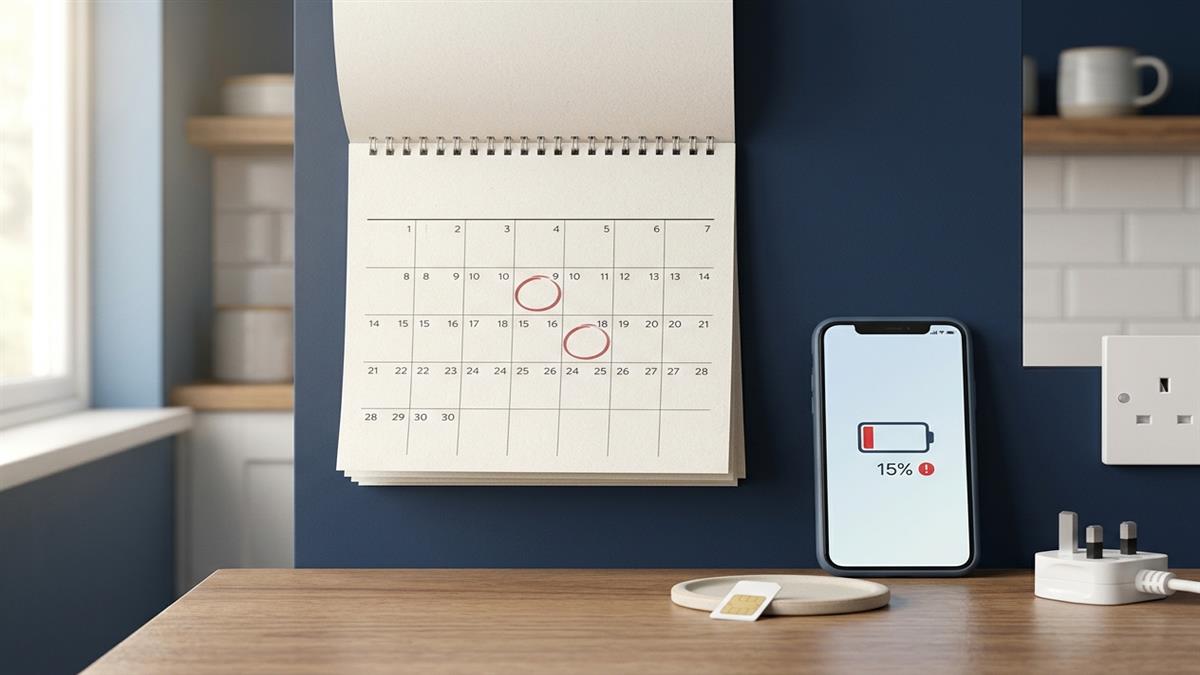
- Put a reminder in your calendar. Set one for a week before your provider's inactivity window ends.
- Make a small chargeable action. A short outgoing call, a text or a small top-up is usually enough.
- Keep a payment method on file. For contract accounts, make sure the direct debit is valid.
- Check the terms. Look for "inactivity", "dormancy" or "validity period" in your provider's help pages.
- Port the number if you are leaving. A PAC moves the number to a new provider and avoids the recycling risk.
- Use the number for something recurring. A monthly verification text or a family contact can keep it in use.
Keep the number you use for security codes
If your bank, email or workplace sends one-time codes to a number, treat that line as critical infrastructure. Losing it can lock you out of accounts far more easily than losing the handset.
Travelling or living abroad
Roaming can pause the inactivity clock while you are away, but not forever. Providers often apply fair-use rules and may suspend a line that is used mainly abroad for an extended period. If you move overseas, check whether your provider allows long-term roaming or whether a local SIM plus a number-porting service is a better fit.
Receiving a code while abroad is not always the same as activity. Check the terms, keep a small UK usage pattern if the number matters, and consider a low-cost recurring plan rather than relying on incoming texts.
If the number has already been disconnected
Contact the provider as soon as possible. If the number is still in the recovery window, they may be able to restore it, often after a payment or a new minimum term. If it has been recycled, the provider cannot give it back. In that case, update your accounts with a new number and watch for any messages intended for the previous owner.
Old reports and call records can add confusion. A recycled number may carry reports from a previous owner, so a lookup result is historical evidence, not a statement about the current user. Our guide to what happens to old numbers explains how recycling works.
The practical rule
Assume that a number without chargeable activity will eventually be lost. The exact window is provider-specific, but the safe habit is simple: make a small chargeable action at least every couple of months, keep your payment details current, and port the number before you cancel. If you are checking a number that called you, start with the UK number lookup and read any recent community reports.
Before you act on a call: check the number in our
UK number lookup, never share a one-time code with a caller,
and use the protection guides if you are unsure.
 Frequently asked questions
How long before a prepaid number is disconnected?
It varies by provider, but many UK prepaid services treat 90 to 180 days without chargeable activity as the point where the number can be suspended and later recycled.
Does receiving a call keep my number active?
Often not. Providers usually count chargeable outgoing activity, top-ups or plan renewals rather than incoming calls.
Can I keep my number if I move abroad?
Sometimes, but the provider's roaming and inactivity rules still apply. A long period abroad with no UK activity can put the number at risk.
What happens after my number is recycled?
The number can be issued to someone else. Old reports and messages may then refer to a previous owner, so treat historic comments with care.
 Related articles
All
 Check a number before you call back
You can also read the latest community reports, browse UK area codes or open the protection guides.